
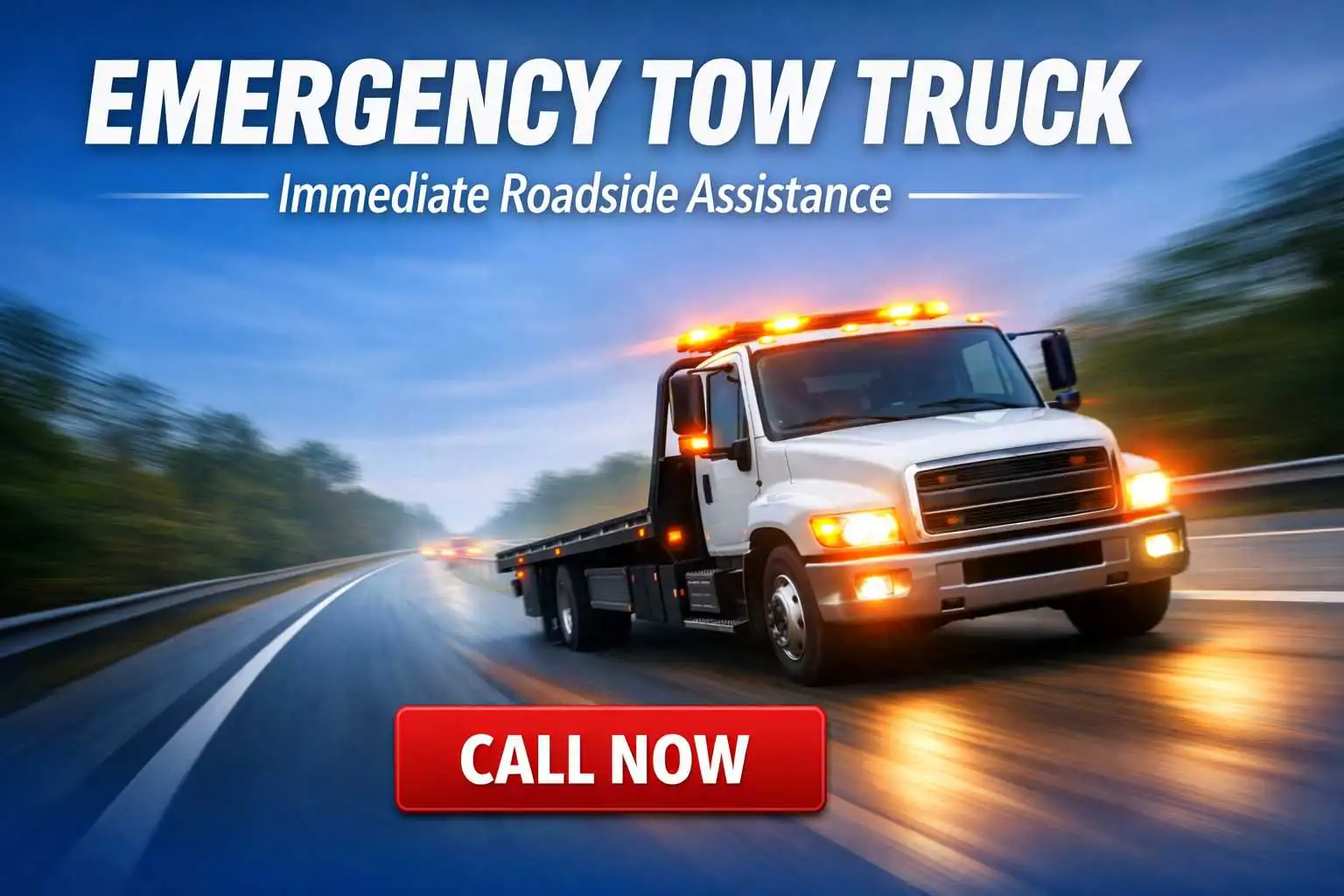
Tow Truck Types Explained: The 5 Types of Tow Trucks and Which One You Actually Need
🔧 Quick Reference
The five main types of tow trucks are: flatbed (safest, carries your whole car), wheel-lift (fast, lifts front or rear wheels), hook-and-chain (oldest, for junk/damaged vehicles only), integrated (heavy-duty for large vehicles), and heavy rotator (crane-like, for overturned trucks and extreme recovery). For most Edmonton drivers, a flatbed tow truck is the best choice — it keeps all four wheels off the ground, prevents drivetrain damage, and works for every vehicle type.
📞 Need a tow right now? (780) 435-2065 — we match the right truck to your situation
When you call for a tow truck, you probably do not think about what type of truck shows up. But the type of tow truck matters — a lot. The wrong truck can damage your vehicle, cost you more money, or simply be unable to do the job. A flatbed tow truck handles a Tesla very differently from a heavy duty tow truck that recovers an overturned semi on the Henday. Under Alberta’s consumer protection regulations, you have the right to choose your tow company and receive a written estimate — so knowing what to ask for matters.
This guide explains all five tow truck types, what each is designed for, and — most importantly — which one you need based on your specific vehicle and situation. It is different from our flatbed tow truck benefits post, which focuses specifically on flatbed advantages. This is the complete picture of every type of tow truck on the road today.
Type 1: Flatbed Tow Truck (Rollback / Slide)
How it works: The entire rear platform tilts hydraulically to ground level, forming a ramp. Your vehicle is driven or winched onto the flat bed, then secured with straps. The bed rises back to horizontal and your car rides on the truck — all four wheels off the road — to its destination.
Best for: Luxury vehicles, AWD/4WD vehicles (Subaru, Tesla, Audi Quattro), low-clearance sports cars, motorcycles, accident-damaged vehicles, long-distance transport, and any vehicle where you want zero risk of additional damage.
Not ideal for: Underground parking garages (too tall — see our low clearance towing page for that), extremely heavy vehicles like loaded semis.
Edmonton context: The flatbed tow truck is our most-used type. For modern vehicles — especially EVs, AWD, and luxury cars — it is the only safe option. Transport Canada’s vehicle safety standards recommend flatbed transport for zero-emission vehicles. Our flatbed towing service uses this truck for the majority of Edmonton calls.
Type 2: Wheel-Lift Tow Truck
How it works: A metal yoke (U-shaped cradle) slides under the front or rear tires and hydraulically lifts that end of the vehicle off the ground. The other two wheels remain on the road. The car is towed with one axle rolling on the pavement.
Best for: FWD or RWD vehicles (not AWD) needing short-distance tows, quick removal from traffic, underground parking garage recovery (compact wheel-lift units can fit under low ceilings), and situations where speed matters more than absolute protection.
Not ideal for: AWD or 4WD vehicles (towing with two wheels down can damage the transfer case or differential — repair cost: $1,500–$4,000+), luxury cars, long distances, motorcycles.
Edmonton context: The wheel-lift tow truck is our go-to for parking garage towing — its compact profile fits under low ceilings where flatbeds cannot enter. It is also used for short-distance relocations where speed is the priority.
Type 3: Hook-and-Chain Tow Truck
How it works: Chains wrap around the vehicle’s frame or axle, and a hook connects to a boom that lifts one end of the car. The vehicle is dragged on its remaining wheels. This is the oldest tow truck design, dating back to 1916.
Best for: Junk vehicles, scrap car removal, totalled wrecks where additional damage does not matter, and situations where the vehicle has missing wheels or severe frame damage that prevents other methods.
Not ideal for: Any vehicle you plan to keep, drive, or repair. Chains scratch paint, dent body panels, stress frames, and can damage bumpers and suspension. Most modern towing companies have largely moved away from hook-and-chain for anything other than salvage.
Edmonton context: We rarely use hook-and-chain towing. For scrap vehicles, we prefer flatbed loading since it prevents damage to your driveway and is faster. The only scenario where chains are appropriate is when a vehicle is too destroyed for any other method.
Type 4: Integrated Tow Truck (Heavy Wrecker)
How it works: An integrated tow truck combines a boom and a wheel-lift system into one heavy-duty chassis, usually with extra axles for stability. The centrally mounted arm can lift vehicles by their axles or frames with immense power, while the wheel-lift handles positioning. These are the workhorses of heavy duty tow truck operations.
Best for: Semi trucks, buses, RVs, motorhomes, heavy commercial vehicles, construction equipment, and multi-vehicle accident recovery. Anything too large or heavy for a flatbed.
Not ideal for: Standard passenger cars (overkill and unnecessary expense). Not suitable for tight spaces due to the truck’s large footprint.
Edmonton context: Our heavy-duty towing fleet includes integrated wreckers for recovering trucks on the QEII, Henday, and Yellowhead, as well as commercial vehicles at industrial sites across Edmonton and Leduc/Nisku.
Type 5: Heavy-Duty Rotator Tow Truck
How it works: A rotator is essentially a mobile crane on a tow truck chassis. Its boom can rotate 360 degrees and extend 30+ feet, allowing it to reach, lift, and precisely position extremely heavy loads from almost any angle. These are the largest, most expensive, and most capable tow trucks in existence.
Best for: Overturned tractor-trailers, multi-vehicle highway pileups, vehicles that have rolled down embankments, heavy construction equipment recovery, and any situation where the vehicle is in a position that no other truck can safely reach.
Not ideal for: Everyday car towing (massive overkill). Rotators cost $500,000–$1,000,000+ and their operating costs reflect that. You only need one when nothing else will work.
Edmonton context: Rotators are deployed for major highway incidents — an overturned fuel tanker on the QEII, a dump truck rolled into a ditch on the Henday, or a crane that toppled at a construction site. These calls are rare but critical, and our heavy-duty team is equipped for them.
Not Sure Which Truck You Need? We Match It for You.
Describe your situation — we send the right equipment on the first trip. 24/7.
Side-by-Side Comparison: All 5 Tow Truck Types
Which Tow Truck Do You Need? Match Your Vehicle
Here is a quick decision guide based on what you drive:
When you call (780) 435-2065, tell us your vehicle’s make, model, and whether it is AWD — we will send the right truck. For pricing details, see our Edmonton towing cost guide. Under Alberta’s 2026 towing laws, you always have the right to choose your tow company and receive a written estimate upfront. For a full overview, visit the homepage or explore roadside assistance, winching, 24-hour towing, battery boost, and insurance billing. We serve all of Edmonton plus Sherwood Park, St. Albert, Spruce Grove, and Leduc.
Frequently Asked Questions About Tow Truck Types
What are the main types of tow trucks?
The five main types of tow trucks are flatbed (rollback), wheel-lift, hook-and-chain, integrated (heavy wrecker), and heavy-duty rotator. Each serves different vehicle sizes and recovery scenarios. For passenger cars, flatbed and wheel-lift are most common. For heavy vehicles, integrated and rotator trucks are used.
Which tow truck type is safest for my car?
A flatbed tow truck is the safest option for almost all passenger vehicles. All four wheels ride on the truck bed, eliminating drivetrain stress, road contact, and the risk of bumper or body damage. This is especially important for AWD, 4WD, electric, luxury, and low-clearance vehicles.
Can a wheel-lift tow truck tow an AWD vehicle?
No — towing an AWD vehicle with two wheels on the ground can damage the transfer case, differential, or center coupling. Repair costs range from $1,500 to $4,000+. AWD vehicles should always be towed on a flatbed with all four wheels off the ground.
What is a heavy duty tow truck used for?
A heavy duty tow truck — either an integrated wrecker (15–50 tons) or a rotator (40–75 tons) — is used for large vehicles like semi trucks, buses, RVs, and heavy construction equipment. They are also used for complex accident recoveries involving overturned or off-road heavy vehicles.
What is the difference between a flatbed and a wheel-lift tow truck?
A flatbed tow truck carries your entire vehicle on its platform — all four wheels off the road. A wheel-lift tow truck lifts only the front or rear wheels, leaving the other two on the ground. Flatbeds are safer (no drivetrain risk) but cost slightly more. Wheel-lifts are faster and work in tighter spaces like parking garages.
Are hook-and-chain tow trucks still used?
Rarely. Hook-and-chain towing can scratch paint, dent body panels, and stress vehicle frames. Most reputable towing companies have moved away from this method for anything other than scrap vehicles, salvage, or wrecks where additional damage is irrelevant.
How do I know which tow truck to request?
Tell the dispatcher your vehicle’s make, model, and drivetrain (FWD, RWD, AWD, or 4WD), the problem (won’t start, flat tire, accident damage, stuck), and your location. A good towing company matches the right truck to your situation — you should not have to guess. Call (780) 435-2065 and we handle the rest.
What type of tow truck fits in a parking garage?
Only compact wheel-lift tow trucks can fit in most underground parkades (standing ~6’0″–6’4″ tall). Standard flatbeds (8’6″–10′) are too tall. Read our parking garage towing guide for more details on how this works.
How should a motorcycle be towed?
Motorcycles should always be towed on a flatbed. They cannot be wheel-lifted and hook-and-chain would destroy them. Our motorcycle towing service uses flatbeds with tie-down straps and wheel chocks designed specifically for two-wheeled vehicles.
What does a rotator tow truck cost to operate?
Rotator trucks cost $500,000–$1,000,000+ to purchase, and their hourly operating costs are the highest in the towing industry. A rotator call-out typically starts at $500+ and can run into the thousands for complex multi-hour recoveries. They are reserved for situations where no other equipment can do the job safely — overturned semis, multi-vehicle highway pileups, and heavy equipment recovery.
The Right Truck for Every Situation. Every Time.
Flatbed, wheel-lift, heavy-duty — we match the equipment to your vehicle and situation. 24/7 across Edmonton.