
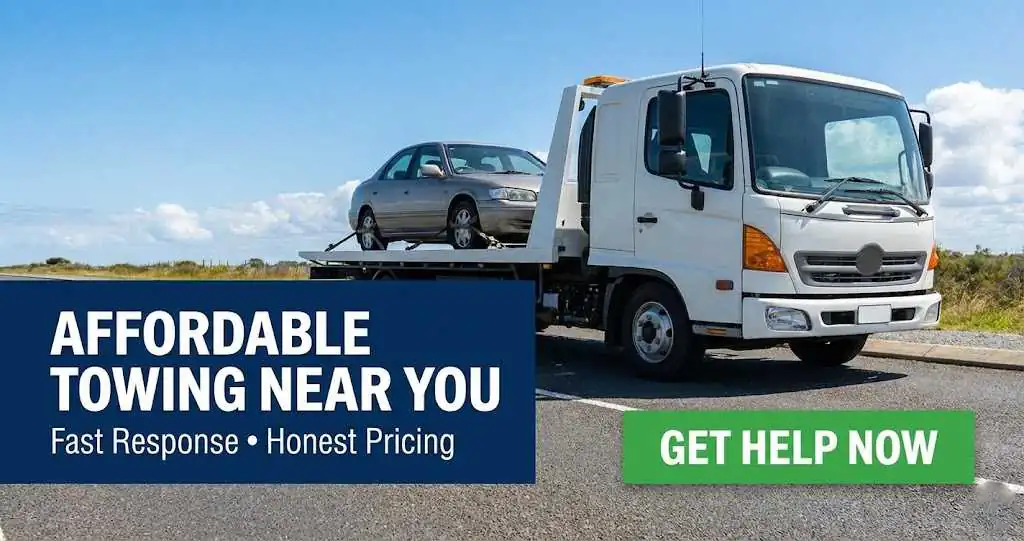
Electric Car Towing Edmonton: The Complete Guide to Safely Transporting Your EV
⚡ The One Rule for EV Towing
Electric cars must be towed on a flatbed — all four wheels off the ground. Unlike gas-powered vehicles, EVs cannot be safely towed with any wheels rolling on the road. The electric motor is directly connected to the wheels, and dragging an EV generates unregulated electricity that can destroy the motor, inverter, and battery management system — damage that costs $5,000–$15,000+ to repair. Our flatbed towing service is the safe choice for every EV in Edmonton.
🔋 EV needs a tow? (780) 435-2065 — specify “electric vehicle” when you call
Electric vehicle adoption in Alberta is growing rapidly. With federal ZEV incentives from Transport Canada, expanding charging networks, and more affordable models from Tesla, Hyundai, Kia, Ford, and Chevrolet, Edmonton’s roads have more EVs than ever. But most Edmonton towing companies — and most EV owners — do not fully understand how electric car towing differs from towing a gas-powered car. The consequences of getting it wrong are severe and expensive.
This guide covers everything Edmonton EV owners need to know: why flatbed-only towing is non-negotiable for EVs, what specific damage occurs when an EV is towed incorrectly, how to activate tow mode on popular EV brands, what to tell the towing dispatcher, and how EV towing in Edmonton works in winter conditions. No other Edmonton towing company has published this guide — we are the first because we believe EV owners deserve better information.
For a broader comparison of all tow truck types and when to use each, see our tow truck types guide. And for a detailed look at why flatbed towing is better for all vehicles (not just EVs), read our flatbed tow truck benefits post.
⚡ Why Electric Cars Cannot Be Towed Like Gas-Powered Cars
In a gas-powered car, shifting to neutral disconnects the engine from the wheels — the wheels spin freely, and no damage occurs during towing. EVs work fundamentally differently:
🔌 No True Neutral Gear
Most EVs lack a conventional neutral that fully disconnects the motor from the wheels. Even in “N” mode, the electric motor remains physically connected to the drivetrain. When the wheels spin, the motor acts as a generator — producing electricity with nowhere safe to go.
⚡ Regenerative Braking Activates
When EV wheels rotate, the regenerative braking system generates electricity and feeds it back into the battery — even when the car is “off.” This unregulated reverse current can overheat the battery pack, blow high-voltage fuses, and damage the battery management system.
🔥 Motor and Inverter Damage
Spinning an EV motor without proper electronic control causes heat buildup in the motor windings and inverter. Even a short improper tow can cause damage that does not show error codes immediately but causes premature failure weeks or months later.
🅿️ Electronic Parking Brake
Most EVs use electronic parking brakes that may not disengage when the 12V battery is dead — a common scenario when an EV needs towing. Dragging an EV with the parking brake engaged destroys brake pads, calipers, and rotors.
💸 The Cost of Towing an EV Incorrectly
Improper towing of an electric vehicle does not just cause inconvenience — it causes damage that voids warranties and generates repair bills that rival the cost of a used car:
A proper flatbed tow for an electric car in Edmonton costs $120–$200. Compare that to $5,000–$15,000+ in repair bills from improper towing. The math is simple — always request a flatbed.
🔧 How to Activate Tow Mode on Popular EVs
Before loading an EV onto a flatbed, the vehicle should be placed in “Transport Mode” or “Tow Mode” — this releases the parking brake and adjusts stability systems. Here is how to do it on the most common EVs in Edmonton:
🚗 Tesla (Model 3/Y/S/X)
Touchscreen → Service → Towing → Transport Mode. This releases the parking brake and allows free-rolling for loading onto a flatbed. If the 12V battery is dead and the screen is unresponsive, the tow operator must use the manual release cable (located under the rear trunk liner or front hood, depending on model).
🚗 Hyundai Ioniq 5 / Kia EV6
Press brake pedal → shift to N (Neutral). This disengages the motor for loading. Always use flatbed — even in neutral, these AWD EVs can generate regen current if wheels spin on the road.
🚗 Ford Mustang Mach-E / F-150 Lightning
Shift to N (Neutral) using the rotary gear selector. Ford specifies flatbed transport only — do not tow with any wheels on the ground. The Mach-E owner’s manual explicitly states wheel-lift towing will damage the electric drive unit.
🚗 Chevrolet Bolt EV/EUV
Shift to N before loading. Chevy requires flatbed transport for all Bolt models. The Bolt is FWD, but GM still specifies all four wheels off the ground to protect the high-voltage system.
⚠️ If the 12V Battery Is Dead
When an EV’s 12V accessory battery dies (which powers the touchscreen, locks, and electronic systems), the vehicle may not respond to tow mode commands, and the electronic parking brake may be stuck engaged. A professional tow operator can either boost the 12V battery temporarily to activate tow mode, or use the vehicle’s manual parking brake release — every EV has one, but the location varies by model. This is why telling the dispatcher “it’s an electric vehicle” is critical — they need to send a crew that knows EV-specific procedures.
⚡ EV Towing Done Right. Every Time.
Flatbed towing • EV-trained operators • Tesla, Hyundai, Ford, Chevy, BMW • 24/7
❄️ Edmonton-Specific EV Towing Considerations
Edmonton’s climate creates unique challenges for electric car towing that milder cities do not face:
❄️ Cold weather range loss: At -20°C to -30°C, EV range can drop 30–50%. This means more “ran out of charge” tow calls in winter. If your EV dies from a depleted battery, it cannot be jump-started like a gas car — it needs a flatbed ride to the nearest charger or your home charger.
❄️ EV weight on icy roads: EVs are significantly heavier than equivalent gas cars due to battery packs (Tesla Model Y: ~4,400 lbs; Ford Lightning: ~6,500 lbs). This weight improves traction in some conditions but makes recovery from ditches and snowbanks more difficult — requiring appropriate winching equipment rated for the extra weight.
❄️ 12V battery failures in cold: EVs rely on a small 12V battery (separate from the main high-voltage pack) to power electronics, locks, and screens. Cold weather kills 12V batteries faster — and when the 12V dies, the EV becomes completely unresponsive. You cannot open the charge port, release the parking brake, or activate tow mode without it.
❄️ Charging infrastructure gaps: While Edmonton’s charging network is growing — you can find station locations on Alberta.ca’s EV page — running out of charge between stations, especially on highway trips to Leduc, Spruce Grove, or on the QEII, is a real possibility. Our long-distance towing service can flatbed your EV to any destination in Alberta.
For comprehensive winter preparation — both EV and gas vehicles — see our winter car help guide.
🔋 How We Load and Secure Your EV on a Flatbed
Loading an EV onto a flatbed requires more care than a gas-powered vehicle. Our operators follow a specific protocol: first, the 12V system is verified (boosted if dead) so tow mode can be activated. The flatbed ramp is lowered, and the EV is either driven up (if still running) or winched using the manufacturer-specified tow hook points — never attached to the bumper, charging port area, or suspension. Once on the bed, non-conductive straps secure all four wheels to the flatbed deck. The EV’s battery housing sits low and flat, so we ensure nothing contacts the undercarriage during transport. For heavier EVs like the Ford Lightning (~6,500 lbs), our flatbed ratings accommodate the additional weight comfortably.
🆚 AMA EV Roadside vs. Independent EV Towing
The AMA now offers EV-specific roadside assistance — but there are limitations to understand. For a full comparison of AMA vs. independent towing services, see our AMA vs. independent towing cost comparison. Key differences for EV owners:
📞 What to Tell the Dispatcher When Your EV Needs a Tow
When you call (780) 435-2065, provide this information for the fastest, safest response:
📋 EV Tow Call Checklist
☐ “It’s an electric vehicle” — say this first so a flatbed is dispatched
☐ Make and model — Tesla Model Y, Ioniq 5, Mach-E, etc.
☐ Is the vehicle responsive? — can you access the touchscreen and activate tow mode?
☐ Is it a dead battery or a dead 12V? — “completely unresponsive” = likely 12V dead
☐ Your exact location — GPS coordinates, nearest intersection, or building name
☐ Where do you want the car taken? — home charger, dealership, body shop, etc.
Under Alberta’s 2026 towing consumer protection laws, you always have the right to choose your own tow company and destination. We provide written estimates before dispatching and offer insurance billing for covered calls. We serve all of Edmonton plus Sherwood Park, St. Albert, and surrounding areas. For all available services, visit our services page or call our 24-hour line.
Frequently Asked Questions About Electric Car Towing
Can you tow an electric car with a regular tow truck?
No — you should only tow an electric vehicle on a flatbed with all four wheels off the ground. Wheel-lift, hook-and-chain, and dolly towing can all cause severe electrical and drivetrain damage costing $5,000–$15,000+. Always request a flatbed when calling for EV towing.
Why can’t electric cars be towed normally?
EVs lack a true neutral gear that disconnects the motor from the wheels. When EV wheels spin on the ground, the motor acts as a generator, producing uncontrolled electricity that can overheat the battery, damage the inverter, and fry the battery management system. This is fundamentally different from gas cars.
How much does it cost to tow a Tesla in Edmonton?
Flatbed towing for a Tesla or any EV in Edmonton typically costs $120–$200 for a standard local tow. Long-distance EV transport runs $3–$5 per kilometre. We provide upfront pricing before dispatch. Many insurance policies cover EV towing through roadside assistance — ask about our insurance billing.
What if my EV ran out of charge and won’t move?
A fully depleted EV cannot be recharged on the roadside like filling a gas can. It needs a flatbed tow to the nearest Level 2 or DC fast charger, your home charger, or the dealership. Call us and we will flatbed your EV to your preferred charging location.
Does improper towing void my EV warranty?
Yes — Tesla, BMW, Audi, Mercedes, Ford, and most other manufacturers explicitly state that improper towing (wheels on the ground) voids the powertrain warranty. If a non-flatbed tow damages your EV, the manufacturer will not cover the repair. Always insist on flatbed transport.
What is “Transport Mode” on a Tesla?
Transport Mode is a Tesla setting (touchscreen → Service → Towing) that releases the parking brake and allows the wheels to roll freely for loading onto a flatbed. It does NOT make the car safe for wheel-on-ground towing — it is only for flatbed loading and short-distance repositioning at very low speeds.
Can you tow an EV in winter conditions?
Yes. Our flatbed trucks operate in all Edmonton weather conditions, including extreme cold. Cold actually makes proper towing even more important — frozen electronic parking brakes are harder to disengage, and cold batteries are more vulnerable to damage from unregulated current flow.
Do you tow hybrid vehicles the same way as full EVs?
Plug-in hybrids (PHEVs) with AWD — like the Toyota RAV4 Prime or Mitsubishi Outlander PHEV — should be flatbed towed for the same reasons as full EVs. Standard hybrids (like the Toyota Prius) can sometimes be wheel-lifted depending on the drivetrain configuration, but flatbed is always the safest option. When in doubt, request a flatbed.
Can an EV be jump started like a gas car?
Not exactly. If the main high-voltage battery is depleted, the car cannot be “jump started” — it needs to be taken to a charger. However, if only the small 12V accessory battery is dead (the one powering the electronics), a standard battery boost to the 12V system may bring the screens and controls back to life, allowing you to charge normally. Our technicians can diagnose which battery is the issue on-site.
What areas do you cover for EV towing?
We provide EV towing in Edmonton and all surrounding communities: Sherwood Park, St. Albert, Spruce Grove, Leduc, and the Highway 2 corridor. For long-distance EV transport across Alberta, see our long-distance towing service.
Your EV Deserves a Tow Company That Understands It.
Flatbed only. EV-trained operators. Tesla, Hyundai, Ford, Chevy, BMW — we know the procedures.